FLAT RACK & LOWBOY — HOW WE MOVE IT
Strip at the port. One unit per truck.
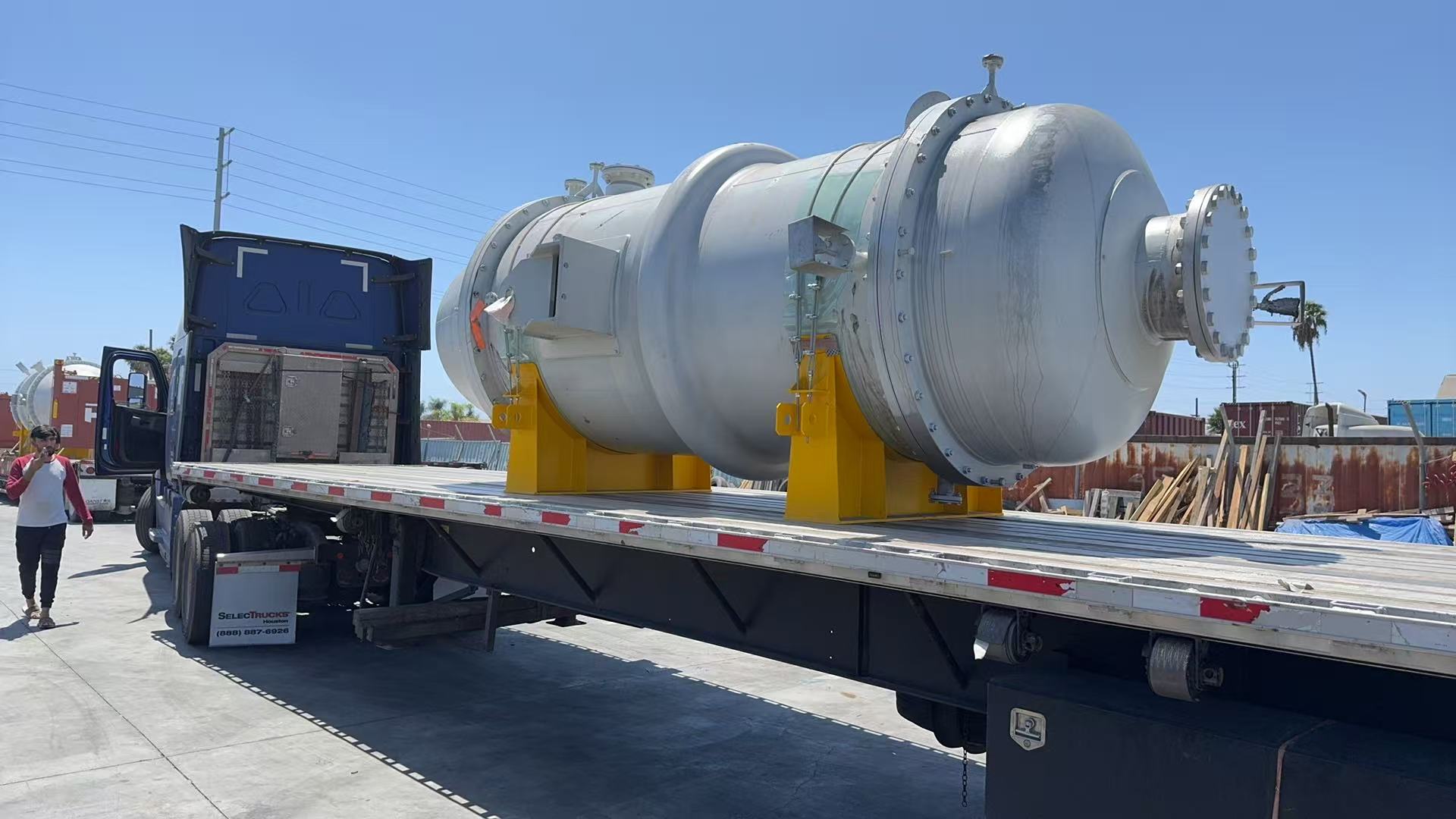
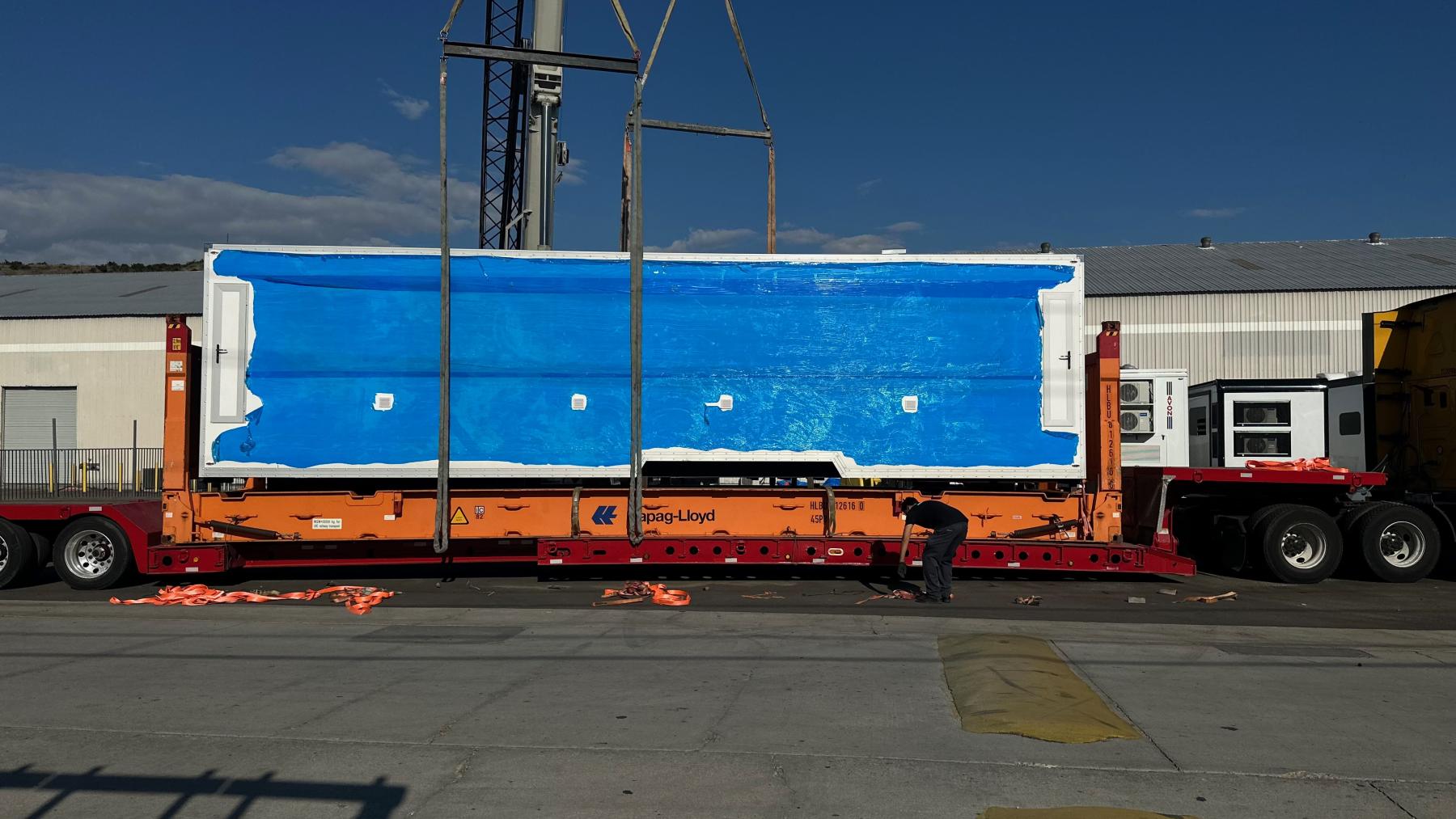
Most oversize and overweight ocean freight arrives on flat rack containers with several units on one rack. An intact flat rack almost never gets a permit when the load is 10' wide and ~15' high — so we strip it at the port and move each unit on its own lowboy.
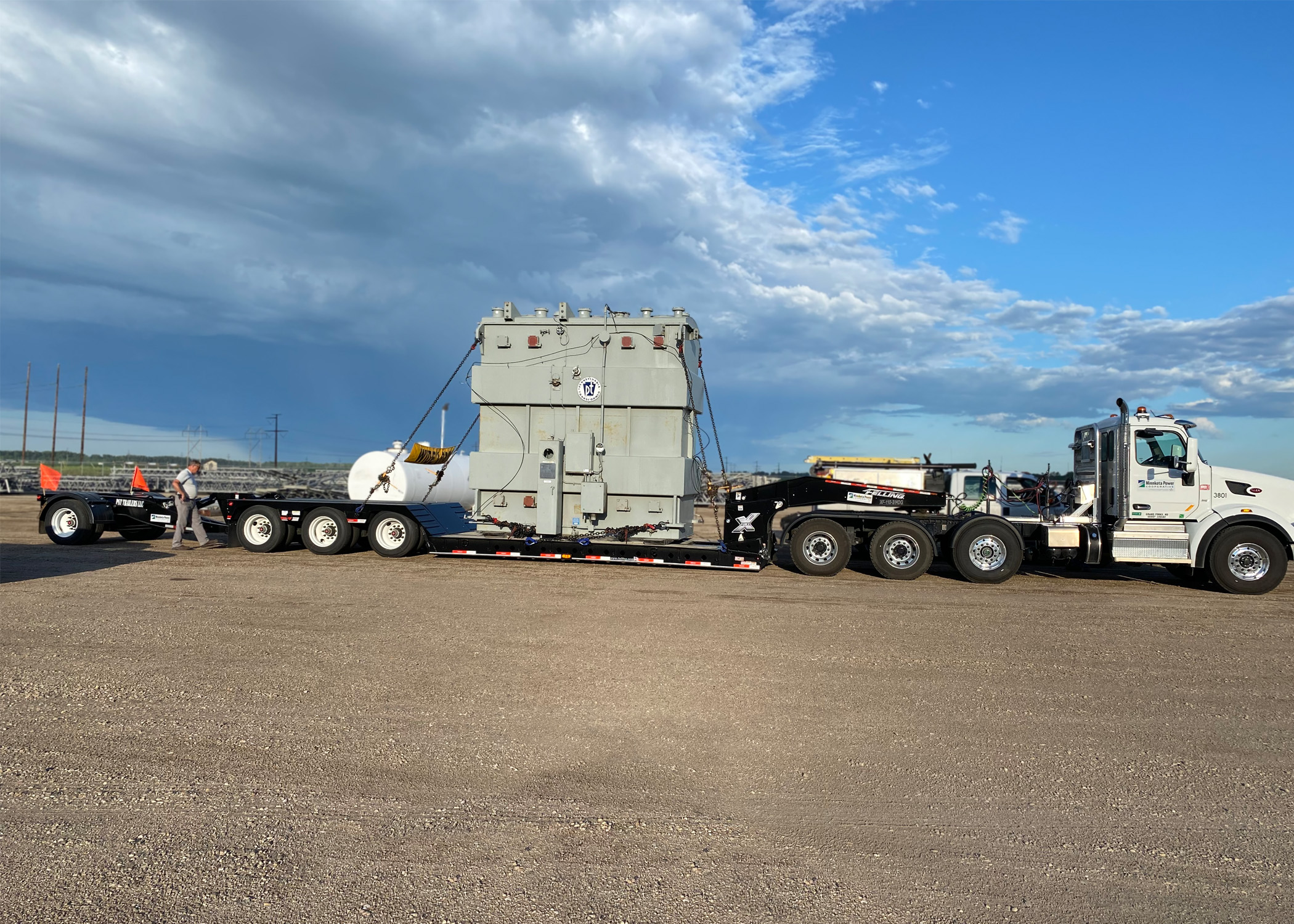
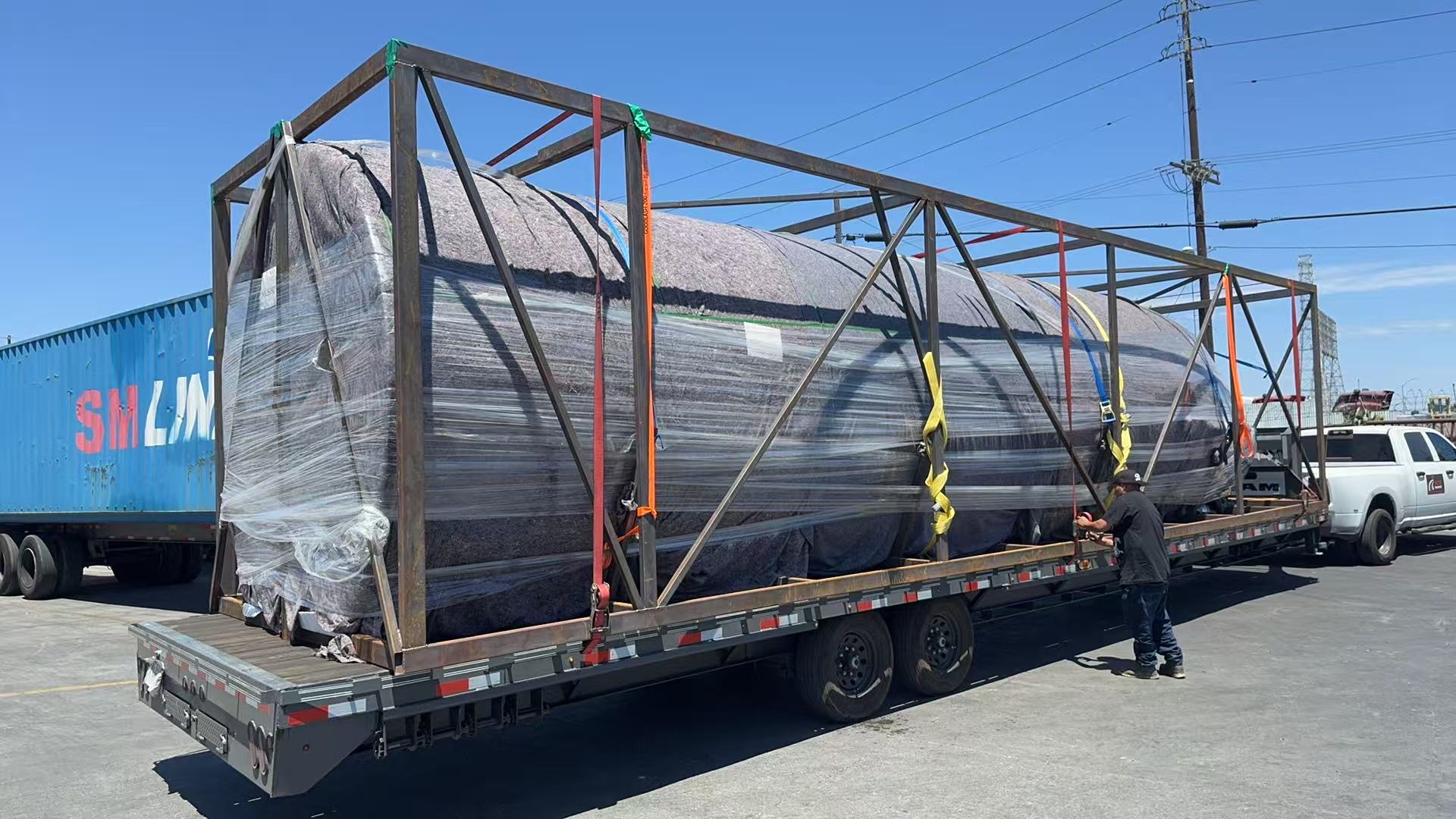
Worked example — Los Angeles to Houston: two pieces of machinery, each 12' × 10' × 12' and 26,000 lbs, on one 40' flat rack. Moved intact that is ~95,000 lbs gross, 10' wide and ~15' high on a lowboy — a superload that will not get a permit. Two units on one lowboy (~84,000 lbs) does not get a permit either. One unit per truck is the move that permits cleanly: each truck is ~58,000 lbs gross — legal weight, no overweight permit — 10' wide and ~14' high, on a standard oversize width permit in each state (CA, AZ, NM, TX), with a pilot car.
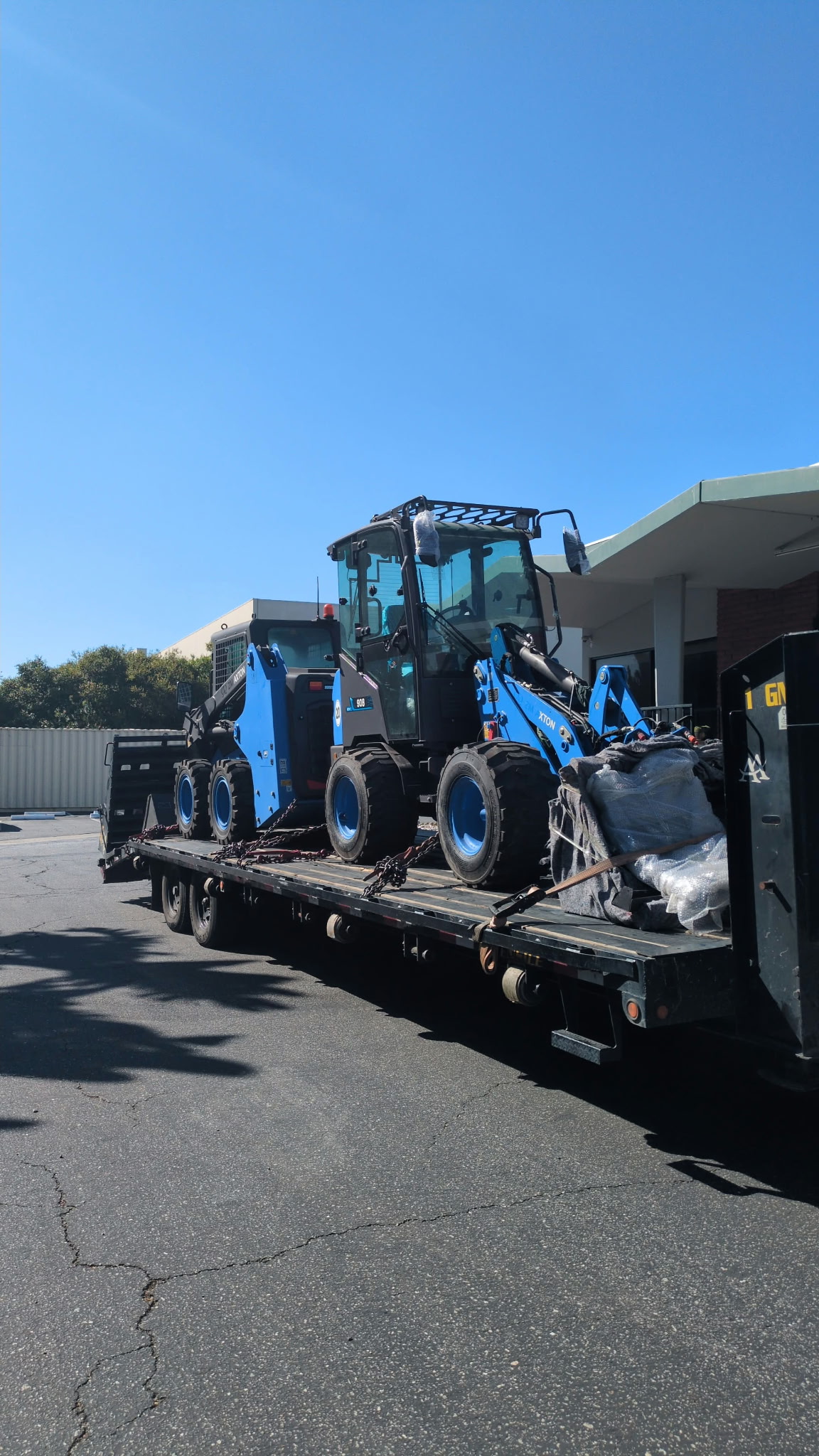
Topping up the deck: a legal-size piece under 15,000 lbs can ride with the oversized unit on the same lowboy — total gross stays under 80,000 lbs, so the permit is unchanged. It must be loaded end-to-end, not side-by-side, so it adds no width or height, and the carrier checks axle weights before departure.
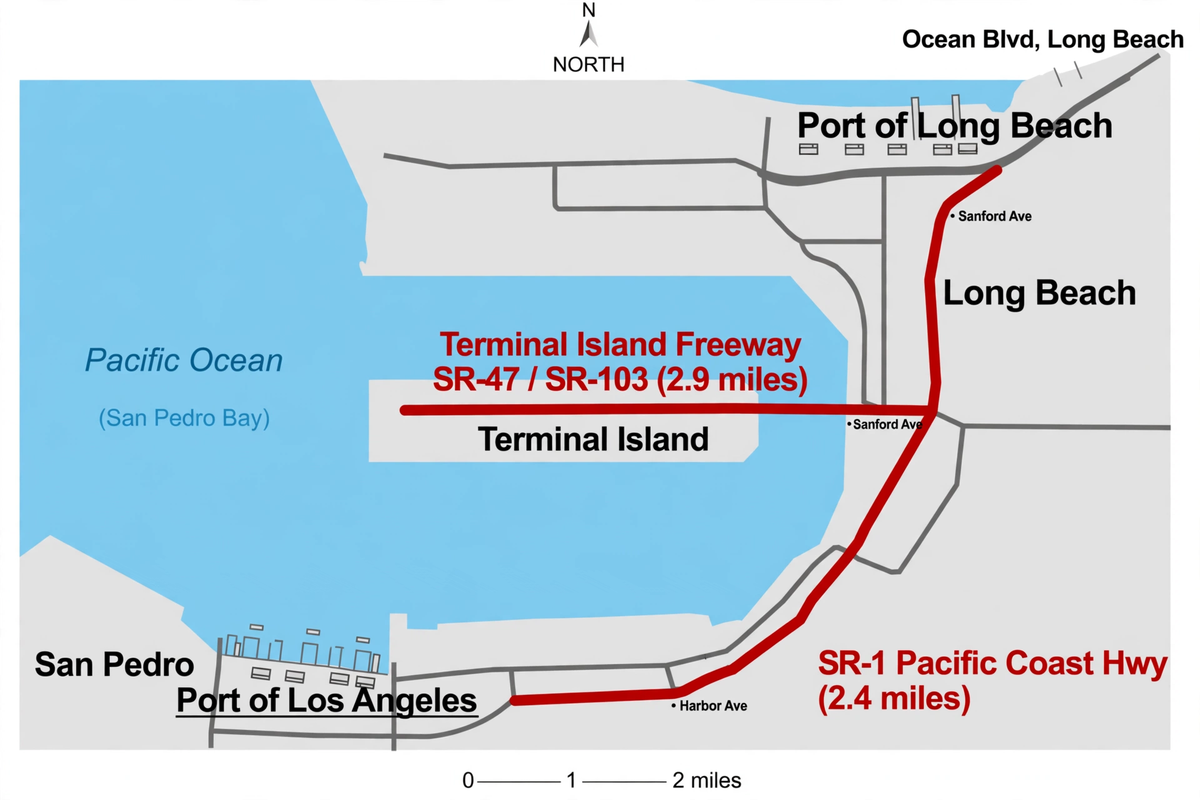
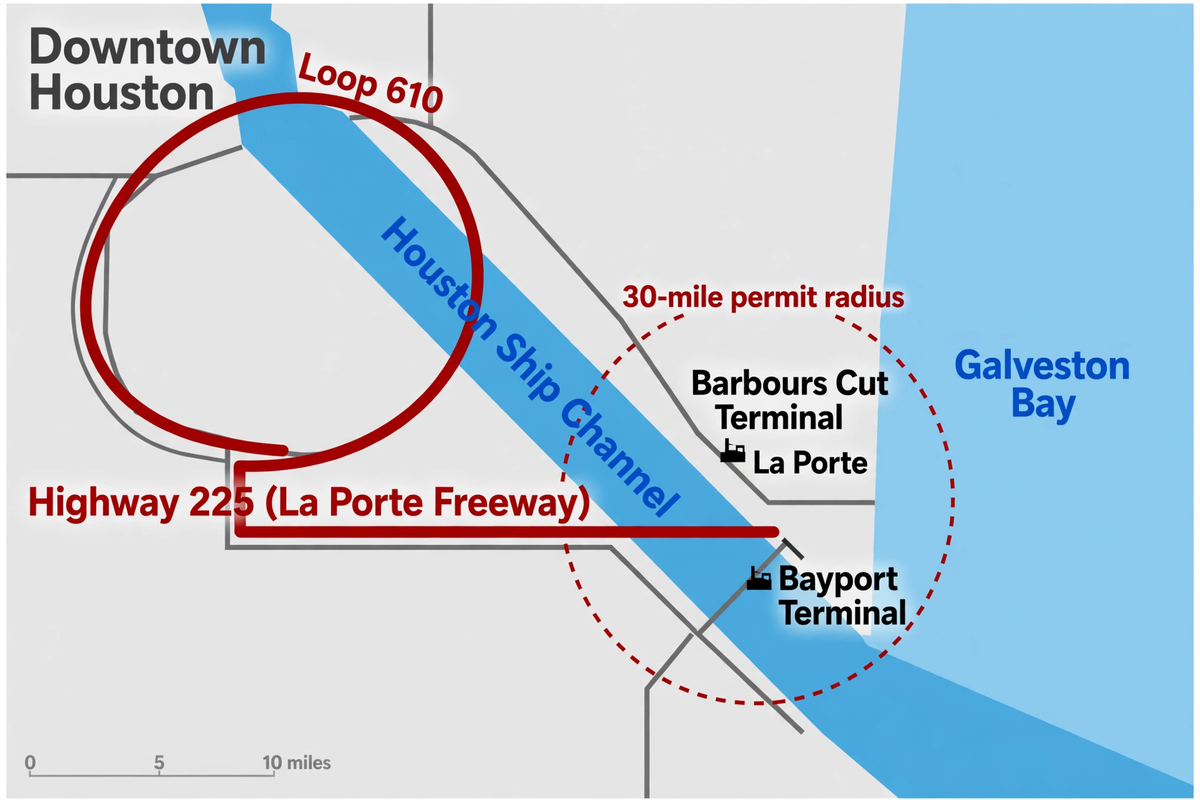
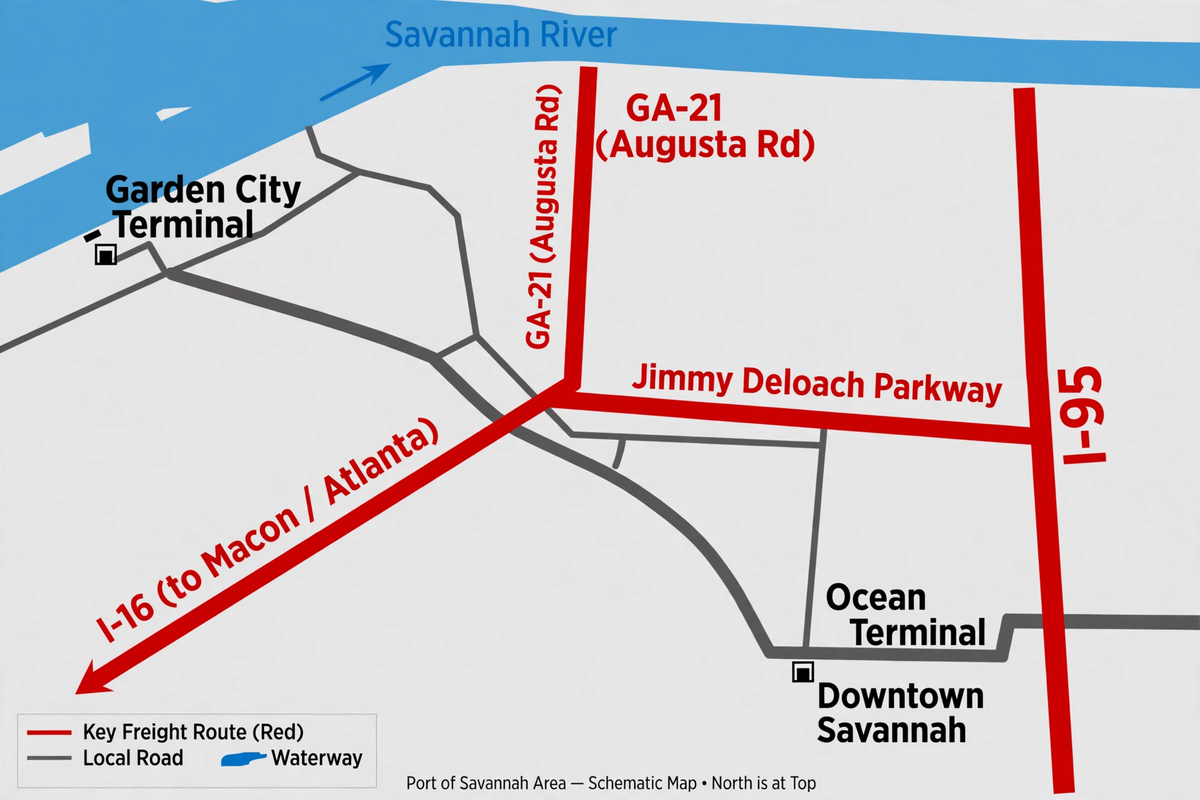
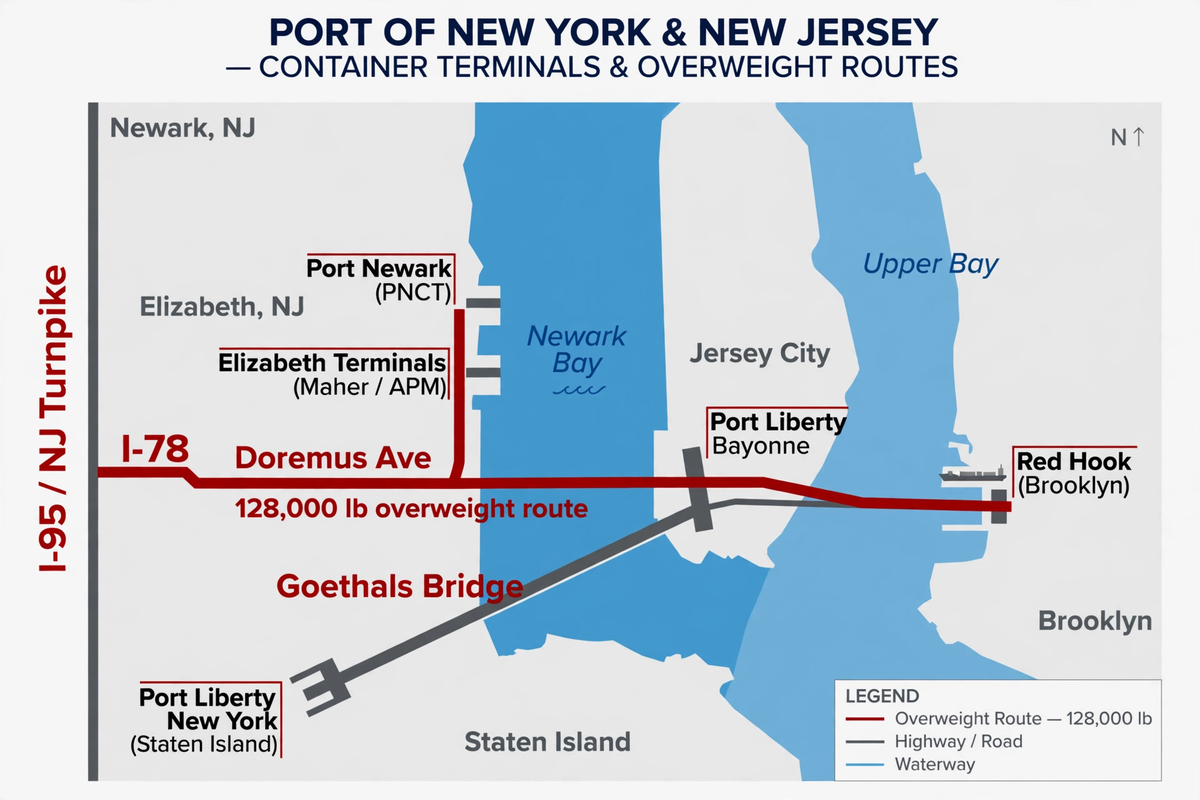
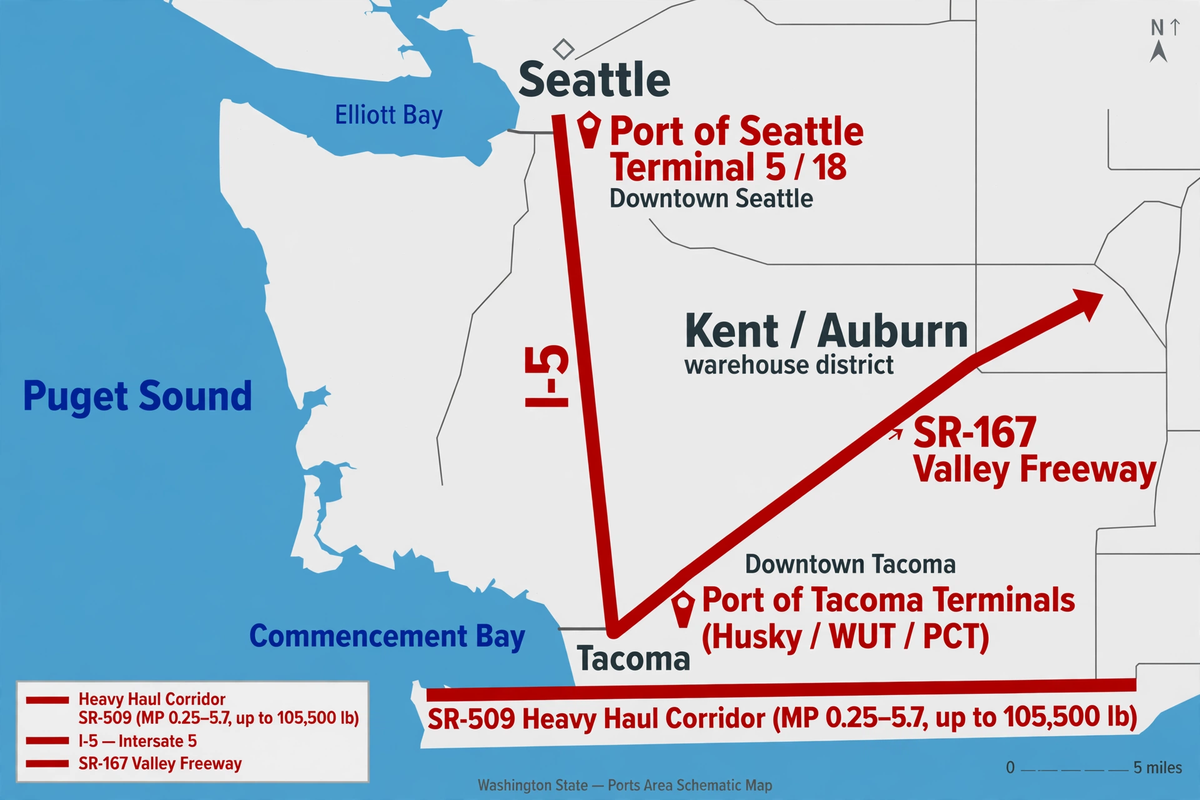
The rule that holds at every port: every overweight-container system is overweight-only, with width capped at 8'6". A 10'-wide flat rack never qualifies. Strip at the port and move each piece on its own lowboy as a standard oversize load. And there is no distance exemption — a permit is needed from the moment the load hits a public road, even one mile.